Tuesday, 12 January 2010

The Man Behind Lara Croft


Ever since Crystal Dynamics became in charge of developing the Tomb Raider series, Lara Croft has seemed to have changed dramatically in terms of appearance and personality. She's more fierce and darker, a now more determined character on a journey to discover her past, and problems surrounding her childhood, many of this having to involve her late mother she lost as a child and how she tragically died, who apparently so she "thought" happened to her, which has always been a mystery in the series.

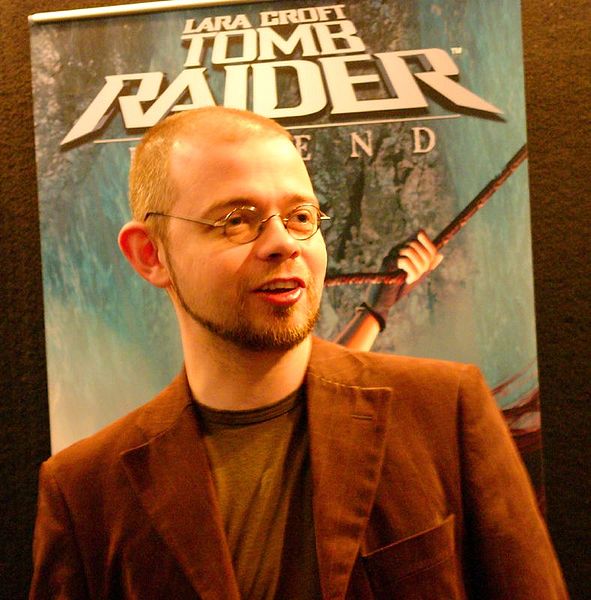
For Core Design, their connection with Lara Croft and Tomb Raider was broken and now in the hands of another developer. Would Crystal Dynamics be able to make a breakthrough and be able to produce a even better Lara Croft then Core Design and make her appealing to the world once again? Tomb Raider creator Toby Gard was "originally employed at Core Design, he designed the original Tomb Raider video game in 1995 along with the character Lara Croft. His work on the game included building and animating most of the game's characters (including Lara), animating the in-game cutscenes, storyboarding the FMV's, and managing the level designers."

Sadly Toby Gard left Core Design in 1997, the first blow to the company's success, as Core Design were not giving him the "creative freedom" he originally had. As more projects involving Tomb Raider came about, his options were limited and did not appeal to him, so in the end he left, forming his own company called "Confounding Factor". Years after his departure from Core Design, Eidos hired him to work with Crystal Dynamics and bring Tomb Raider back to life starting off with Tomb Raider: Legend.

Considering Crystal Dynamics' recent history and Tomb Raider's status as one of the most recognizable brands in the industry, the listing shown for jobs available with Crystal Dynamics led many to believe that the studio was staffing up for a new Lara Croft-led action adventure. Lending more credence to that speculation, the creator of the buxom brunette herself has taken the reins as lead designer at Crystal Dynamics. In 2007, Tomb Raider: Anniversary, directed by Toby Gard himself, was released to mark Tomb Raider's 10th Anniversary which was a complete remake of the original first game he created 10 years previously in the series.

In November 2008, the darkest and most realistic version of Lara Croft, Tomb Raider: Underworld was released. It seemed to being going so well for Crystal Dynamics, but their newest game didn't get the praise they expected it to recieve. In return, the worrying news that once brought down Core Design with Angel of Darkness struck Crystal Dynamics with Underworld, two TR games that happened to show a "different" side of Lara Croft. It seems games involving the newer and more mysterious heroine never did so well financially-strange. Jobs were cut down by Crystal Dynamics following the unexpected blow. According to this article from gamesindustry.biz:

"Eidos' Crystal Dynamics studio has shed another 25 positions, the publisher has confirmed.

"We can confirm that Crystal Dynamics has made a reduction of approximately 25 people at the San Francisco studio," said Eidos in a statement issued to GamesIndustry.biz.

"This decision is a reflection of the continued drive to focus resources at the studio. We would like to thank all of the employees affected by this difficult decision for their hard work during their time at Crystal and we wish them all the best in the future."

Tomb Raider developer Crystal Dynamics sacked around 30 staff at the start of the year, following disappointing sales of the latest game in the series, Underworld."

It was revealed after Underworld that Toby Gard had been tapped to lead development on an as-yet-announced project at Tomb Raider developer Crystal Dynamics. The information was significant, considering that Gard created the highly acclaimed original Tomb Raider and that Eidos indicated it would give the franchise a major makeover in the next installment. Unfortunately after 9 months into the "secret" project, Toby Gard left Crystal Dynamics, transitioning to a new role as an independent game consultant, with an emphasis in animation, story, and cinematic design, character design, game design, and balancing. Neither him or Eidos Interactive commented on his decision to leave.

"The only real way that I can really effect Lara Croft is to be in charge of a project. More and more as I was working at Crystal, especially on Underworld where I was just doing cinematic work, the reality is the control of the characters is in the hands of the creative directors and the publisher.

"I think it's just something you have to learn to realise that there's no one person really in charge of what goes on with a character and they have a life of their own in the hands of the team."-Toby Gard.

What will become of Lara Croft now that her creator, left to persue his own independent career? During Gard's departure, Eidos became unable to move forward and paired up with the highly successful Japanese RPG games company who gave us Final Fantasy and Kingdom Hearts, two major titles completely different from Tomb Raider.

Their name? Square Enix.

[Resources]:

-http://en.wikipedia.org/wiki/Toby_Gard

-http://uk.gamespot.com/news/6212186.html

-http://uk.gamespot.com/news/6227680.html

-http://www.gamesindustry.biz/articles/crystal-dynamics-hit-by-more-lay-offs

-http://www.gamesindustry.biz/articles/gard-time-was-right-to-leave-tomb-raider

Sunday, 3 January 2010

Core Design vs. Crystal Dynamics


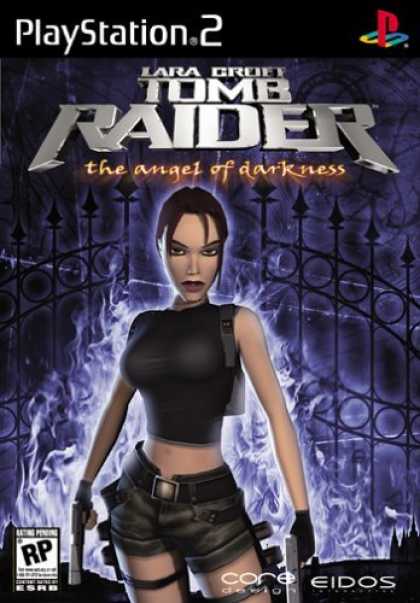
Tomb Raider slowly declined in good reviews, with the 2003 release of "Tomb Raider: Angel of Darkness" taking the hit. Many game related websites & magazines, such as IGN and Gamespot criticised the Playstation 2 version of the game more then the PC version, due to its problems with practically every part of the gameplay, which left its audience disappointed. According to a Wikipedia article on Tomb Raider: Angel of Darkness:

"The game received mediocre reception from critics, receiving a 5.3/10 from IGN and a 6.5 from GameSpot, with an overall GameRankings score of 56% for the PS2 version. The Metacritic review site stated that PS2 version of Tomb Raider: The Angel of Darkness has met with "mixed or average reviews",[1] while the PC version received "generally negative reviews".[2]. Reviewers praised the improved graphics, sound and the environments, while they criticized large amount of bugs, control system, combat system, camera, steep system requirements etc."

Due to the failure and lack of positive attention, Eidos announced that following a poor review of both the Tomb Raider franchise and Core Design, the first developer behind the gaming series, development on further Tomb Raider titles were moved to the hands of another studio Crystal Dynamics, in the US. Originally Core Design is widely known for the Tomb Raider series, created by Toby Gard and Paul Howard Douglas, which as we know was released in 1996, followed by several sequels. The success of Tomb Raider and its subsequent sequels played a huge part in keeping Eidos Interactive financially solvent until the release of Tomb Raider: Angel of Darkness. As Eidos made their final decision on how Tomb Raider would be handled for now on, this prompted three key members of the Core Design team and several others to leave the company and establish a game development team of their own, Circle Studio. Even the founder of Core Design departed due to the downfall of the latest Tomb Raider title which also threatened to damage Eidos even further financially, according to this statement:


"The move also followed the departure of Core founder Jeremy Heath-Smith from the boards of both Core and Eidos shortly after the launch of the long-delayed and critically panned title, which threatened to damage Eidos' full year results as its release date slipped marginally past the June 30 financial year-end. However, Eidos has now confirmed that all but 500,000 units of the title shipped within the June quarter, and the publisher expects to meet its original expectations for operating profit (pre goodwill) in the financial year to June '03".

The future for Core Design, however, looked unsure of, as without Lara Croft-or the founder Jeremy Heath-Smith, there's a question mark over the worth of the studio to Eidos. This must have been rather depressing for Core Design, knowing that Lara Croft, Tomb Raider and all other assets that go along with the game were going to be removed from them and given to a "better" developer to take care of for the sake of Eidos, throughout the entire time true Lara Croft creator Toby Gard was hardly ever mentioned as he left Core Design a long time ago. Other titles from the studio in the past few years had underperformed at retail, and Eidos' statement on the matter didn't inspire confidence, stating only that "the Company will now be evaluating the Core Design studio's on-going direction and contribution as part of the Group's overall development capabilities."

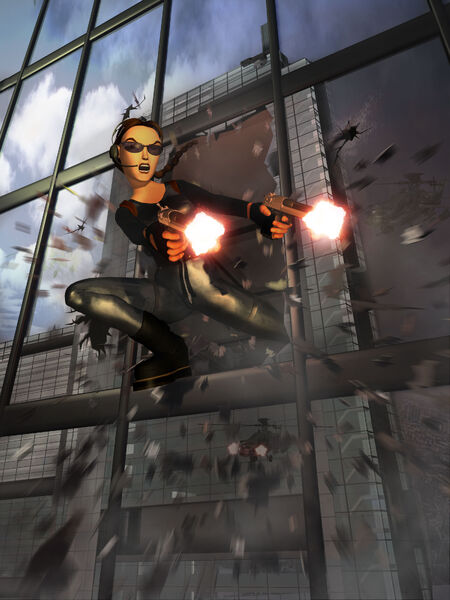
(Tomb Raider: Angel of Darkness, developed by Core Design-2003)

(Tomb Raider: Legend, developed by Crystal Dynamics-2006)

Definitely a difference in just three years on how Lara Croft has been portrayed by either developer. Crystal Dynamics have made her seem more "realistic".

According to Paramount Pictures, the negative reviews Angel of Darkness recieved affected the 2003 opening sequel to the first Tomb Raider film, "Cradle of Life". The blame was slapped on to Core Design, Eidos now had only one hope left that Crystal Dynamics could possibly turn Lara Croft and the Tomb Raider franchise around, regaining back it's popularity and positive outcomes financially. As Crystal Dynamics are behind the latest "Legacy of Kain" games which have been critically acclaimed and given sufficient creative freedom, Tomb Raider stood a chance.

The Tomb Raider franchise took another battering when Paramount Pictures blamed the poor quality of Angel of Darkness for dismal opening weekend figures for the latest Tomb Raider movie, Cradle of Life, in the USA. However, the move to Crystal Dynamics may inject new life into the brand; the company's Legacy of Kain games have been critically acclaimed, and given sufficient creative freedom, there are certainly great things that could be done with Lara Croft and the Tomb Raider franchise.All original plans for the series were dropped from Core Design and passed on to Crystal Dynamics, who gave us Tomb Raider: Legend, Anniversary and Underworld.

[Resources]:


[1]-http://www.gamesindustry.biz/articles/eidos-moves-tomb-raider-away-from-core

[2]-http://en.wikipedia.org/wiki/Core_Design

Saturday, 2 January 2010

Lara Croft: Makeover Time


Over a decade, Lara Croft has been known as the female game heroine with a large chest, tiny waist whilst traveling around in nothing more then revealing a little shirt and pair shorts. Though now Eidos are having doubts about the original look of Lara Croft, fearing her appearance has now become officially uninteresting and repetetive, so a change for their icon is in place. "The publisher’s suggestions have come forward as the recent release of Tomb Raider: Underworld missed sales expectations by some £20 million, while developer Crystal Dynamics has been subjected to layoffs to focus the team's output to the core IP". Eidos are suggesting the modern video game icon Lara Croft should go under a more family friendly redesign, this could possibly mean losing her iconic appearance and possible sex appeal to appear more "realistic" and suitable to cater to different markets.

As Tomb Raider is failing to bring happiness to its fans, it is suspected that Lara’s popularity , as a character, is fading particularly in the US. And, as the commercial success of all Tomb Raider games have always had a degree of dependence on Lara’s image, this may prompt a fresh face for the heroine in her next title. Her image doesn't seem to be achieving success, since Tomb Raider: Underworld was released and it failed to get anywhere. There are other reasons as to why the most recent Tomb Raider title flopped. It is possible during late 2008, was in competetion of other big selling new games such as "LittleBigPlanet" and "Spore". These games did incredibly well in terms of sales, it wouldn't surprise me this also caused Underworld's fall.

According to Eidos CFO Robert Brent, “we need to look at everything, as we develop the next game. Look at how Batman changed succesfully, from the rather sad character of the Michael Keaton era to the noir style of The Dark Knight"

"The Tomb Raider franchise has been through a popularity rollercoaster in its 12 years, hitting the heights of Lara’s image on the cover of the (now defunct) lifestyle magazine and “fashion bible” The Face, while the heroine’s sixth adventure, The Angel of Darkness, was critically panned and failed to make an impact at the retailers." As Angel of Darkness put a stop on the Tomb Raider series, considering how poorly it was acclaimed to be, Core Design were stuck in a hole and needed serious help.

"The franchise then enjoyed a revival as its development moved from Core Design to Californian outfit Crystal Dynamics, which released Tomb Raider: Legend in 2006 to critical praise and commercial success." Strangely enough Angel of Darkness failed, yet was designed by Core Design. Underworld was designed by Crystal Dynamics, yet that too failed. So what exactly is going wrong and how did two completely different design companies let Eidos down?

Now, as Crystal Dynamics’ Tomb Raider: Underworld missed its sales targets, despite positive reviews , Eidos is pondering that Lara’s image needs to cater to different markets. Lara enthusiasts will no doubt know that the full-figured archaeologist had previously gone under the knife to more directly appeal to her current audience as shown in Tomb Raider: Legend, Anniversary and Underworld.


[Resources]

-http://www.edge-online.com/news/lara-faces-family-friendly-redesign


(One of the early Lara Croft models, Lara Weller from "Tomb Raider: Revelation")


(The newest Lara Croft model, Alison Caroll from "Tomb Raider: Underworld")


Wednesday, 23 December 2009

Tomb Raider Hits the Big Screen


As the Tomb Raider Series got more popular in the late 1990s, there came a time a film based on the adventures of Lara Croft was to be produced by director Simon West. Lara Croft: Tomb Raider was released on June 15th 2001. Tomb Raider fans had their prayers answered-but was the film a success? According to RottenTomatoes.Com [1] "Angelina Jolie is perfect for the role of Lara Croft, but even she can't save the movie from a senseless plot and action sequences with no emotional impact." I however fount a better review on the film.


(Official movie poster for Lara Croft: Tomb Raider)

Personally after watching the film as well as the sequel "Lara Croft Tomb Raider: Cradle of Life", I have to say it portrays the world of Tomb Raider in depth, bringing real archaeology sites to life as well as all other aspects of the game. Angelina Jole plays the role of Lara Croft incredibly well in terms of looks and her "calm" yet fierce personality. [2] “Lara Croft: Tomb Raider” chronicles one of the many adventures of Lara Croft (Angelina Jolie), a modern-day, female version of Indiana Jones. After uncovering a long-buried secret from her father’s mysterious past, Lara learns she must seek out a powerful object known as The Triangle of Light. Upon embarking on this perilous quest, Lara soon discovers that she is not the only one interested in the artifact. A secret society known as The Illuminati hope to attain control of the Triangle, and if they succeed, our world could be in grave danger."

The film shows gives an inside view of Lara Croft's daily life which consists of risking her life to find mysterious artefacts and moving forward with dangerous quests. If the film based on the series wasn't too good to be true for Tomb Raider fans, the surprise behind the fact Academy Award actress Angelina Jolie was to play the role of Lara Croft shocked them all, even myself. "Prior to her casting, Angelina could have easily passed as a real life version of the character based solely on her looks or at least served as possible inspiration for the character’s appearance. Another reason her casting surprised me was because the role was so unlike most of her previous work, which had been predominantly dramatic in nature, not counting “Gone in 60 Seconds”. Even with her relative inexperience in the world of action films, Angelina handled the role rather well. There were just a few moments where she seemed a little uncertain of herself, but generally she stayed true to the character’s confident nature as depicted in the video games". I think it's great that Angelina Jolie stayed true to Lara Croft's character, I personally don't think another actress could have done a better job.


(Angelina Jolie as Lara Croft)

The film's plot was seen as unoriginal and "cliche", lacking interesting characters and could have been improved a great deal in order to make Tomb Raider seem more exciting and adventurous, possibly even attract more fans. "It occurred to me while watching the movie that the lack of any truly interesting characters, aside from the titular one, coupled with a fairly unoriginal and basic plot, could have served as an example of how not to make a film adaptation based on a video game or otherwise. However, the film’s terrific turn at the box office allowed it to emerge victorious over its various inherent faults. Despite its drawbacks, I have to say that “Lara Croft: Tomb Raider” is a superficially entertaining action adventure. Just be sure to check your brain at the door first."

So a success or not? Lara Croft Tomb Raider made a break through, and became one of the only most successful video game adaptions to date. No doubt Eidos were highly impressed with their fortune. Their video game heroine became a shining star.

Box Office Performance:

[3]-"Tomb Raider debuted at number one with $48.2 million, giving Paramount its second-best debut and the fourth-highest debut of 2001. It beat the opening record for a film featuring a female protagonist ($40.1 million for Charlie's Angels), and is the most successful video game adaptation to date, grossing $300,000,000 worldwide."

The Lara Croft Tomb Raider film was a great adaption of the Tomb Raider game. The Tomb Raider franchise became stronger and even more dominant in our culture, especially in gaming culture. Irish rock band "U2" featured clips of the film within their 2001 hit "Elevation", turning Lara Croft into even more of an icon on our television screens and grew to become even more famous than she was before.


[Resources]

[1]-http://www.rottentomatoes.com/m/lara_croft_tomb_raider/
[2]-http://www.moviefilmreview.com/lara-croft-tomb-raider-2.php
[3]-http://en.wikipedia.org/wiki/Tomb_Raider_%28film%29


Wednesday, 16 December 2009

Tomb Raider is not just a game...


Other then being a major game franchise, Tomb Raider hasn't always been a video game nor has Lara Croft always followed her original storyline. A Tomb Raider comic, originally released in 1999, told a different side of Lara's story, which somewhat follows only part of the plot surrounding her in the game. The comics portray her character as a more sexually attractive woman, revealing more flesh then she normally does and has a far more fierce and dominant attitude as well as role in the world.


"The series, which ran from 1999 to 2005 (in which the fiftieth and final issue was released), consisted of monthly issues published by Top Cow Productions who secured the rights to producing comics after a long struggle. Preceding this series, French publisher Glenat (publisher) got the green light from Eidos France to produce a comic series called Dark Eons based on the Tomb Raider games which was taken off the market shortly after. Besides the monthly series, a parallel 12-part series called "Journeys", which ran from 2001 to 2003, was also published.

The comics follow a different continuity compared to that of the games and the films. In the comics, the plane crash experienced by Lara kills both her parents as well as her fiancee, and takes place when she is an adult as opposed to being a young girl, as is the case with the game's continuity. Writers Dan Jurgens, John Nay Riber and James Bonny worked on the series, which also featured the art of Andy Park, Michael Turner, Billy Tan, and Adam Hughes, amongst others."


Besides being in comic books, she has also been featured in "Re/Visioned: Tomb Raider Animated Series", a ten part animated series based on the Tomb Raider series. Although it didn't air on television, it was made live on an online game service named GameTap on July 10th, 2007. Though it recieved criticism on the choice of animating style used to create the short animated series, Lara Croft is shown how she is in the game, her past is hidden away and it mainly focuses on her adventures and trying to achieve her goals of what she is aiming for.


Our lovely video game heroine has appeared also in original novels, fanart, cosplay, fan-made online parodies, as collectable figurines, clothing-basically all sorts of merchandise and sources of entertainment. Perhaps the biggest one of them all are the Lara Croft models, usually young women who reassemble Lara herself and are skilled in gymnastics who promote Tomb Raider, and the live-action Tomb Raider film, which took Hollywood by storm.


[Resources]:

-http://en.wikipedia.org/wiki/Tomb_Raider_%28comics%29

-http://www.tombraidercomics.com/gallery/gallery39.asp

-http://en.wikipedia.org/wiki/Tomb_raider_animated_series


Tuesday, 8 December 2009

Lara Croft: Feminist Icon or Cyberbimbo?


First off, let us look at the definition of "feminism":

"Feminism is an intellectual, philosophical and political discourse aimed at equal rights and legal protection for women."

Basically, feminism revolves around the belief that women are equal to men, fair enough. So how exactly does Lara Croft enter this equation? Simple. It is down to being one of the very first female game characters who took on a role of a hero and a supporter, but only to support herself, not other characters unlike in other games. Lara Croft was no damsal in distress and took on the role traditionally male game characters would have been given. Although she appears in not only the game,


"It is also increasingly difficult to distinguish between Lara Croft the character in Tomb Raider
and Lara Croft the ubiquitous virtual commodity used to sell products as diverse as the hardware to play the game itself, Lucozade or Seat cars. What follows then is an analysis of the efficacy and limitations of existing feminist frameworks through which anunderstanding of the kinds of gendered pleasures offered by Lara Croft as games character and cultural icon can be reached."

Lara Croft, hardcore female archaeologist or just a plastic bimbo doll in a catsuit?

Her character is a form of representation to sell products due to her "sex appeal", though it's no doubt her character draws in her spectator, that being whoever is drawn in to her character, as Lara Croft is considered a visual spectacle. Her sexualised appearance in general has been known to disrupt the relation between the two key words, which has taken its affect on its audience and within gameplay, not just outside in the real world. Though feminists were in awe at the fact a new female game character would rise and mark a significant departure from the typical role of women within popular computer games and take female gamers by storm, their icon was merely a piece of eye candy for male gamers, which made gameplay more enjoyable for their sake, which of course led to countless arguments as to whether she was just another disgusting "cyberbimbo" and not a true feminist icon at all.

"Psychoanalytically informed approaches which have developed from the insights offered by Laura Mulvey's landmark essay (1975) on the function of women within film narrative have a very different take on the tropes of this type of image. Two key insights which appear relevant to Lara are Mulvey's argument that the female body operates as an eroticized object of the male gaze and the fetishistic (fetish: a form of sexual desire in which gratification depends to an abnormal degree on some object or item of clothing or part of the body) and scopophilic pleasures which this provides for the male viewer."


There is one argument that can relate Lara Croft, that she is nothing more then a eroticized object of the male gaze, in our case the gaze of male gamers and gives them pleasure due to her fetishistic appearance. Another argument aimed at the heroine is that "active" or "strong" female characters signify a potential threat to the masculine order, as Lara Croft appeals in a slight "castrate" body (castrate-emasculate: deprive of strength or vigor) with her heavy layering of fetishistic signifiers such as her glasses, her guns, the holster/garter belts and her swinging hair.

Although Lara Croft may seem as a male fantasy object, discussion of the matter has been brought up in how she may possibly be available for female fantasy, the encapsulation of both "butch" and "femme" modes of representation make Lara open to potentially queer indentification and desire.

To wrap this up, due to both sides of continuous arguments and discussions that arise about Lara Croft, there is no definite answer as to what she truly is. A feminist icon or a cyberbimbo? In my opinion she is a consideration of both titles. She may look like a cyberbimbo wielding a pair of guns in a revealing outfit, but she also represents a female game character with power, something feminists look for due to their beliefs. The fact that Lara actually has neither sexual or romantic encounters in the game tells us something, even though some male characters in Tomb Raider are shown to be attracted to her, friend or foe. With this being said, Lara Croft has no sexual identity or subjectivity and was designed to be an object of male desire.

As for a definite answer to the question?
There is none.

[References]

-http://www.gamestudies.org/0202/kennedy/
-http://en.wikipedia.org/wiki/Feminism
-http://wordnetweb.princeton.edu/perl/webwn?s=fetish
-http://wordnetweb.princeton.edu/perl/webwn?s=castrate


Tuesday, 1 December 2009

Brief History of Tomb Raider


Tomb Raider, considered to be a "media franchise" began as an action-adventure video game, revolving around the many adventures of Lara Croft, a female British archaeologist in search of ancient treasures who was equivalent to that of Indiana Jones, only in woman form. Her first appearance was in "Tomb Raider", released for the Sony Playstation, Sega Saturn and PC in 1996. Soon the adventurous and "sexy" young archaeologist became an international icon for the gaming industry, taking a whole new spin on the gaming franchise and according to "The Guinness Book of World Records", she was recognised as the "Most Successful Human Videogame Heroine" in 2006.


Lara Croft is also seen as a virtual sex symbol.
(Move over Princess Peach and Princess Zelda, a new girl is in town)

As well as starring in a game, Lara Croft has appeared in comic books, novels, theme park rides fanart and as collectable items. The biggest hit was in 2001 when the first "Lara Croft: Tomb raider" movie was released followed by a sequel in 2003 "Lara Croft Tomb Raider: The Cradle of Life" starring the famous actress Angelina Jolie, who took on the role of this super gaming icon, portraying her exactly as she would have probably been if she existed in the real world.

The Tomb Raider Series continues on, ending in a total of nine games so far. Publisher Core Design having worked on the first six in the series, and Crystal Dynamics having worked on the latest three. Due to Eidos Interactive pairing up with Japanese RPG game company Square Enix, future Tomb Raider titles apparently will be released under the new owner's name, though it has not been confirmed.

Now I shall move on to my research. For starters lets take a look at "feminism", as Lara Croft was the ultimate fantasy for a gamer fans, particularly young men. Of course many feminists didn't take this too kindly, although some accepted the fact she was an "icon".

[Resources]:

-http://en.wikipedia.org/wiki/Tomb_Raider